
If you're a beginner baker, I'm sure you can relate to the utter disappointment of pulling your brownies out of the oven to find them bubbling up like a greasy volcano, or taking them out of the tin only to find a pool of oil at the bottom. Brownies are supposed to be rich and decadent, but there is, of course, a fine line between fudgy and oily.
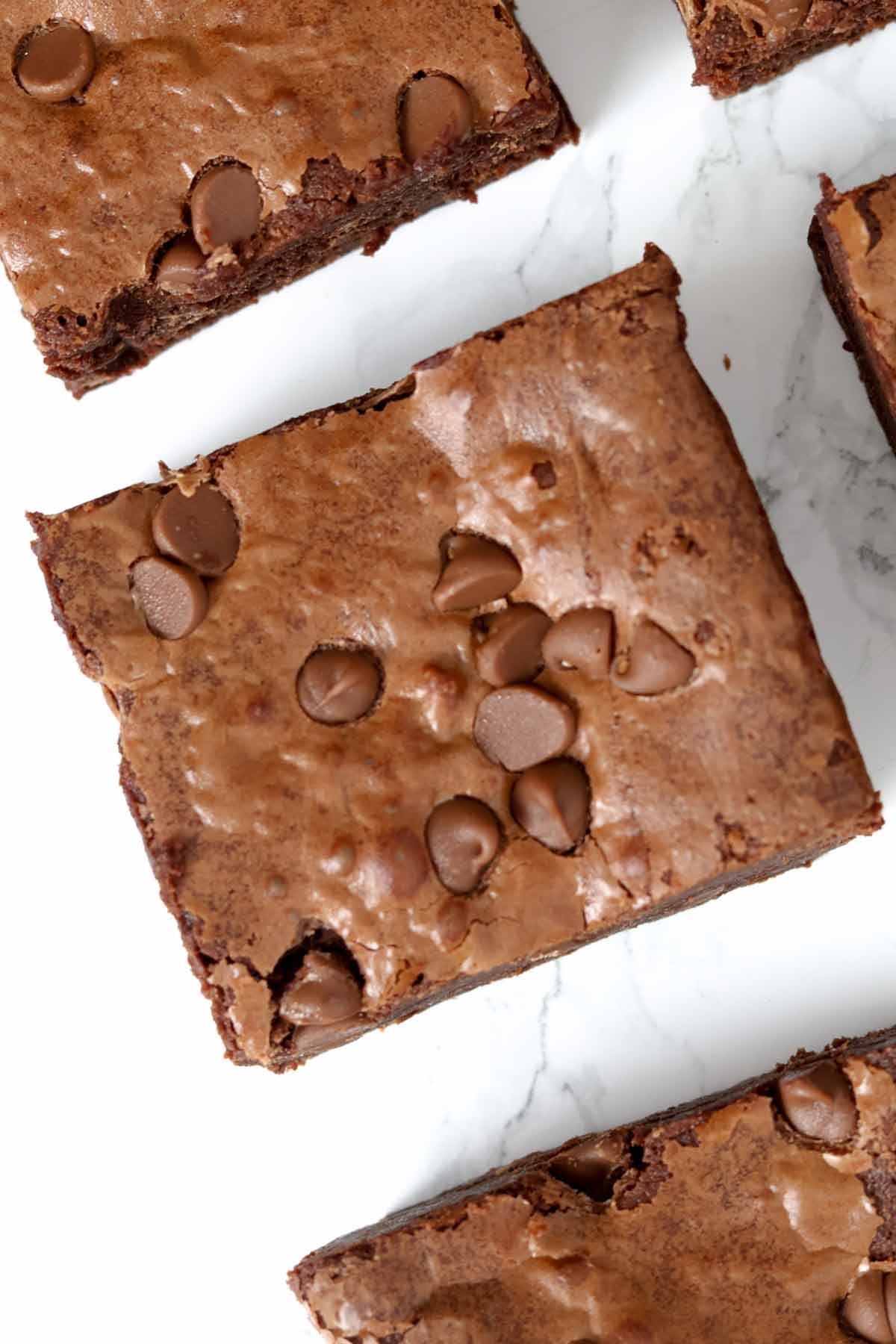
The good news is that greasy brownies are usually the result of a few simple mistakes, and they're actually pretty easy to fix. I wrote this post for any beginners out there who might be struggling with oily brownies, to explain the most common reasons and how to prevent them in future. I hope it helps you on your brownie-baking journey!
Why are my brownies oily?
Here are 6 of the most common reasons your brownies are turning out oily.
1. Using too Much Sugar
Although it might not be the first thing that comes to mind when troubleshooting oily brownies, using too much sugar (or an incorrect fat-to-sugar ratio) is actually one of the most common mistakes.
Think of sugar like a fat sponge when making fudgy brownies. It absorbs and holds the fat, which helps create a nice chewy bite. But if the sponge is overloaded with too much sugar, the fat can't stay contained and ends up separating, resulting in oiliness.
To prevent this, it's best to stick to tested ratios, especially if you're trying out a new recipe. For fudgy brownies, a good rule of thumb is roughly 1 part fat (butter and chocolate combined) to 0.9 parts sugar- this is the ratio I use in most of my brownie recipes.
Cakey brownies are a little different from fudgy ones. Even though the sugar is usually higher than the fat (my cakey brownie ratio is 1 part fat to 1.7 parts sugar), these brownies don't turn greasy because the extra flour creates a structure that holds everything together. That's why cakey brownies are light and airy, not oily, even with more sugar than fat.
2. Using the Wrong Chocolate
Not all chocolate is created equally. High-quality dark chocolate (70%-85% cocoa) has the right balance of cocoa solids, cocoa butter, and sugar to melt and emulsify smoothly into brownie batter.
Some lower-quality chocolates, especially cheap baking bars or candy melts, may contain more sugar and less fat. This can throw off the balance as the extra sugar won't dissolve properly into the fat, and the lack of cocoa butter means it'll lack structure and won't hold together. The result is brownies that are both too sweet and too oily.
I've written a detailed post about the best chocolate to use for brownies, which explains how to pick chocolate that will give you the perfect texture every time. Or, if you prefer something easier, check out my cocoa powder brownies, which are made without chocolate.
3. Not Whisking Enough
As I wrote in my brownie tips post, whisking isn't just about combining the ingredients; it's about emulsification. Without proper whisking, your batter won't form a stable emulsion. Sugar needs to dissolve into the eggs properly (at least for fudgy brownies) to create a smooth, glossy base. If you skip this step or rush it, the undissolved sugar granules can lead to separation during baking. When the heat hits, the fat "escapes" instead of staying evenly mixed, which is when you get greasy patches or puddles of oil.
To ensure this doesn't happen, whisk your eggs and sugar together until the mixture is pale, thick, and glossy. You should be able to lift the whisk and see ribbons fall back into the bowl (not disappear immediately). Orlando Murrin describes the correct texture to be like a 'thick milkshake', which I think is a pretty good description.

4. Too Much Fat
This one is pretty obvious! If you add too much fat, you'll probably end up with greasy brownies. The reason, again, comes down to ratios. Brownies rely on a precise balance of fat, sugar, eggs, and flour- fat brings richness and fudginess, while flour provides structure. If there's too much fat with nothing to absorb it, it separates.
To prevent this, measure carefully, especially when using melted butter, and use a kitchen scale whenever possible. It's also important to resist the temptation to increase the fat for "extra fudgy" brownies- you usually can't adjust one ingredient without adjusting the others, otherwise the texture will be thrown off.
5. Not enough eggs
Although it's not as obvious as using too much fat or sugar, not having enough eggs can make your brownies greasy. The proteins in eggs help bind everything together so that the batter stays stable as it bakes. If there aren't enough eggs, the fat can separate, leaving your brownies oily. This is especially true for fudgy brownies, which have less flour and rely more on eggs to keep their structure.
This is also why swapping eggs for alternatives such as flax or chia "eggs" doesn't always work in traditional brownie recipes. Those substitutes don't have the proteins that eggs provide, so the batter can't hold the fat properly. If you want eggless brownies, it's best to follow a recipe that's been specifically tested for egg-free baking.
6. Not Enough Flour
As I mentioned above, the fat-to-flour ratio needs to be just right to prevent oily brownies. To maintain their fudgy texture, brownies use a lot less flour than cake. But if you cut it down too much, the batter loses its structure. You'll essentially end up with a block of fat and sugar held together with eggs, which ultimately results in oiliness. A good fat-to-flour ratio for fudgy brownies is 4 parts fat-containing ingredients (weight of butter and chocolate combined) to 1 part flour, and for cakey brownies, it's closer to a 1:1 ratio. I've written lots more about ingredient ratios in my ultimate brownie baking guide.
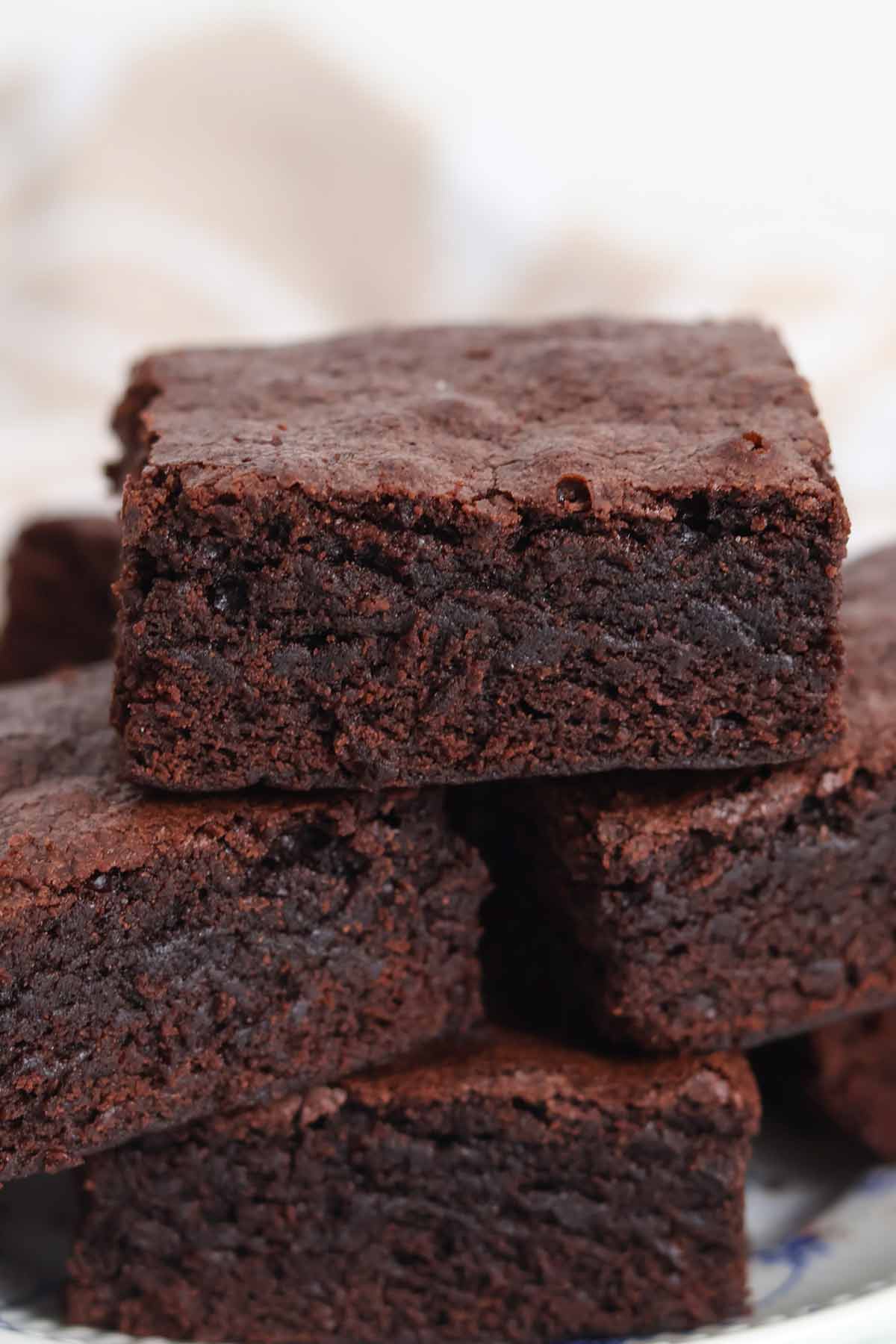
In summary, don't reduce the flour in your recipe unless you also adjust the fat and sugar. Every recipe has a sweet spot where the flour is just enough to hold everything together but not enough to create a cakey texture.
7. Rushing the melting process
Many brownie recipes start off by melting the butter and chocolate together. If you turn the heat up too high, melt them for too long in the microwave, or forget to stir them as they melt, they can separate instead of emulsifying. Once this happens, unfortunately, there's no saving it!
To prevent this, always melt chocolate and butter together very slowly- either over very low heat on the stove, in a double boiler, or in short microwave bursts (20 seconds at a time). Stir gently but frequently to encourage emulsification.
How to fix oily brownies after baking
Even after your best efforts, brownies can still turn out oily if you're new to baking. Below are 3 of my top tips for fixing greasy brownies after baking. Note that if your brownies are extremely oily or the batter has completely separated during baking, there's unfortunately no way to fully fix them. Prevention is your best bet here!
Pop them in the fridge
One of the best ways to fix oily brownies after baking is to chill them in the fridge overnight. Chilling brownies helps the fat that separated during baking to solidify, making the brownies firmer and easier to cut. When you remove them from the tin, you might notice a layer of white spots on the bottom but don't worry- this is just the separated fat that has hardened. It doesn't affect the taste, and your brownies will still be rich and delicious!
Glam them up
If your brownies are too greasy but still taste good, you can cut them into small squares and lightly dust them with cocoa powder or icing sugar. This helps to absorb a bit of the surface oil and makes them look more polished. Another good idea is to serve them with cream or ice cream- this not only makes the brownies feel more indulgent, but it also balances the texture so the oiliness isn't as noticeable.
Repurpose them
If they're too oily to serve as-is, you can try using them to make brownie pops or break them into pieces and use them for an ice cream topping or even in a brownie trifle. The added texture from the other ingredients will help to mask the oiliness.

Troubleshooting checklist
Most oily-brownie disasters come down to a lack of balance. As I mentioned earlier, the ratios of fat, sugar, eggs, and flour have to be precise in order to work together smoothly. When any one of them is too far out of proportion, or the batter is not mixed properly, the result is separation and oiliness.
Another often-overlooked issue is improper tin lining, which can allow batter or melted fat to seep and pool between the liner and the tin. For best results, check out my guide on how to line a traybake tin to make sure you've got clean edges, proper overhang, and no gaps.
Here's your final troubleshooting checklist:
- Check your sugar ratios and make sure it's dissolving properly.
- Use high-quality chocolate with enough cocoa butter. 70-85% chocolate is best.
- Whisk the eggs and sugar together thoroughly before adding the fats.
- Ensure there's enough flour to provide structure.
- Melt the fats slowly over low heat to avoid separation.
- Use a scale to weigh your ingredients accurately.
- Egg substitutes almost never work as a direct 1:1 swap. For egg-free brownies, it's best to use a recipe that's been specifically created for that purpose.
- Stick to well-tested recipes and avoid making adjustments, especially if you're a beginner.

With these tips, your next batch of brownies should be fudgy, rich, and indulgent- without a hint of greasiness! Remember that brownie baking is about balance, but don't stress if you don't get them perfect on the first try. Part of the fun is in experimenting, learning how the ingredients (and your oven!) behave, and eventually mastering your perfect recipe. I hope you've found this post useful and if you have any feedback, I'd love to hear it in the comments below. Happy baking!


Leave a Reply